
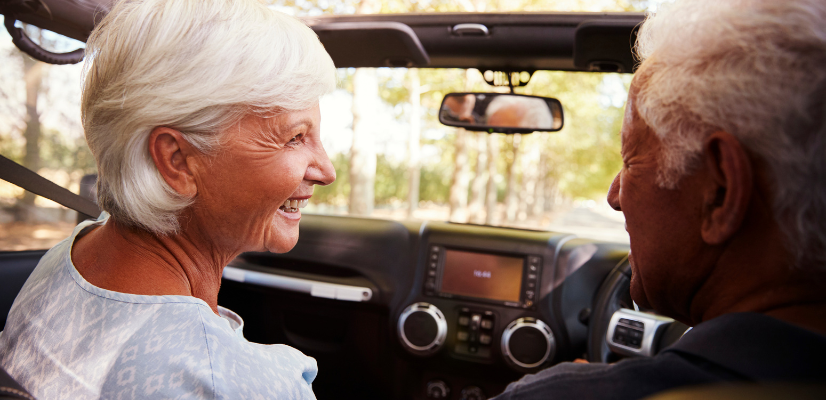
Nowadays, older drivers are holding on to their licenses longer and putting more miles on their vehicles than in the past. It’s also true that the number of drivers aged 70 and older involved in fatal crashes has been on the decline for more than 30 years. However, normal aging involves decreased reaction time, vision problems, and hearing decline. Keep in mind that for many seniors, aging involves taking medications for various health issues. The more medications you take, the greater the possibility of driving with reduced abilities.
As one expert put it, the deciding factor should be whether your grandchildren should be allowed to ride with you while you are driving.
What are some of the driving warning signs? While medical conditions may be one way to gauge fitness for driving, there are some less obvious reasons to question your older adult’s road-worthiness:
- Are they driving inconsistently — either too fast or too slow?
- Have they started losing their way on familiar roads?
- Are they involved in accidents or near misses?
- Has parking or turning the car become an issue?
- Have they received tickets for driving violations?
- Are they running red lights or stop signs?
- Is their vehicle showing dents and scratches?
- Are they using lanes inappropriately?
- Have any friends or family members voiced concerns, or are they hesitant to drive with them?
If the answer to any of these questions is yes, you or your loved one may want to answer the HealthinAging.org driver safety questionnaire. Depending on where you live, your state may require in-person and more frequent license renewals, vision tests, and road tests.
A hard talk
You and your loved one may not have an easy conversation about this issue. More often than not, the mature driver is in denial about their reduced abilities and is not yet willing to relinquish the car keys. You want to make sure to have the conversation sooner than later. Later may mean that the driver is putting themself, other drivers and pedestrians at risk. Perhaps you can involve a trusted outsider like a doctor or a member of the clergy to broach the subject.
Give your mature driver practical options that allow them to maintain their independence. There are online services that deliver groceries and medications. Perhaps a family member or a friend can offer rides to doctor’s appointments or community senior programs. You can set up taxi service accounts with Lyft or Uber to drive your older family member from place to place as they please.
Giving up driving is one of the unfortunate but necessary milestones of life. The key is to keep your loved one safely on the road for as long as possible. When that is no longer the case, it’s time to give up the car keys and recognize that it’s still possible to have a full life.
Read more about how to combat senior loneliness and isolation with our free resource, ‘Aging in Place with Confidence,’ which can be downloaded here.

- Your Estate Plan Should Be a Journey, Not an Odyssey - September 25, 2026
- Missing Routine in Retirement - September 21, 2026
- The Most Important Role In Your Estate Plan - September 8, 2026
See Larger Map Get Directions