
Several factors impact your three-digit FICO credit score. The most important thing is your history of paying specific bills on time each month. Your mortgage, auto, student, and personal loan payments are reported to the national credit bureaus of Experian, Equifax, and TransUnion. So are your credit card payments. Paying these on time each month will help your score.
Your credit-utilization ratio is the second most important factor in building a strong credit score. This ratio measures how much of your available credit you are using. The higher this ratio, the worse it is for your credit score. That’s because lenders worry that you might struggle to make your payments on time if you are burdened with too much credit card debt.
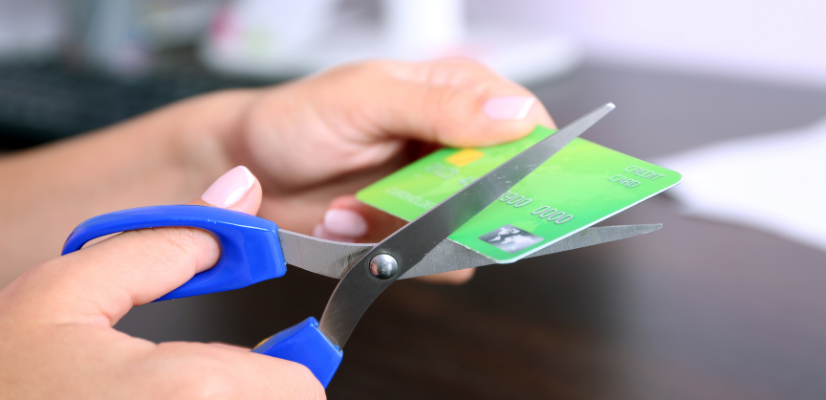
Closing a credit card account, even if you no longer plan on using it, can immediately increase your credit-utilization ratio. And that can cause your FICO credit score to take a tumble.
How it works
The damage to your credit-utilization ratio can happen if you regularly carry a balance on your other cards past their due dates. If you cancel an unused card that doesn’t have a balance, you’ll immediately reduce your available credit while not lowering the amount of credit you are using. This will immediately boost your credit-utilization ratio.
Here’s an example: Say you have five credit card accounts with a total credit limit of $10,000. Say you also have a combined balance of $3,000 on these cards. By dividing $3,000 into your $10,000 credit limit, you get a credit-utilization ratio of 30%.
Now, say you cancel one of these cards, an account that you never use that has a credit limit of $3,000. You’ll still have $3,000 of credit card debt. But your total available credit will have dropped to $7,000. Dividing $3,000 by $7,000 gives you a credit-utilization ratio of about 43%.
That higher ratio will hurt your FICO credit score.
Should you keep that credit card account open, even if you don’t plan on ever using it again? That depends. If you don’t carry a balance on your other cards and pay them off in full each month, closing an unused account can make sense. If you stop using your card, the provider behind it might close it anyway.
Look at the big picture
But if you do carry a balance on your other cards from month to month? You should keep that account open. At the same time, work to pay off your credit card balances. The best way to use a credit card is to charge only what you can afford to pay off in full on or before each due date. By doing this, you won’t be hit with the high interest that credit card providers charge.
And if you have committed to no longer using a credit card account, stick to that vow. You don’t want to add more credit card debt if you are working to pay off existing balances. As with so many financial decisions, you should work with a financial professional to manage your credit.
We delve further into the impact of retirement on your credit score in our previous blog: Retired? You Still Need To Maintain Your Credit Score.

- What Is a Living Trust? - August 3, 2026
- A Basic Guide to Trusts in Estate Planning - July 31, 2026
- Don’t Outlive Your Money: Planning for Longevity Risk - July 27, 2026
See Larger Map Get Directions