

When you are planning your estate, you may have concerns about leaving large lump sums of money to the beneficiaries. There are many possible reasons for the trepidation, including youth, inexperience, impetuousness, and spendthrift tendencies.
Fortunately, there are tools in the inheritance planning toolkit that can provide peace of mind, and one of them is the discretionary trust. To understand why this approach works, it helps to look at the details.
Discretionary Trust Basics
Instead of giving your beneficiaries their inheritances outright, you can fund a discretionary trust to hold those assets on their behalf. Once property is transferred into this type of trust, the trust owns the assets, not the individuals you name as beneficiaries.
That distinction is the foundation of how a discretionary trust works. A discretionary trust is irrevocable.
After it is funded, you cannot simply pull the assets back out or rewrite the rules. This permanence is intentional.
It allows the trust to operate independently of the beneficiaries’ personal circumstances and financial decisions. Under a discretionary trust, beneficiaries do not have the right to demand distributions.
They also do not control how trust assets are invested or managed. Instead, a trustee makes distribution decisions based on the standards you set in the trust document.
Those standards may be broad or detailed, but the key point is that access to the assets depends on trustee judgment, not beneficiary entitlement. This structure shifts the focus away from immediate ownership and toward long-term stewardship.
Rather than asking how much each person receives and when, you are deciding who should oversee the assets and under what conditions distributions should be made. That shift is often what brings peace of mind to people who worry about the impact of a sudden inheritance.
Asset Protection
One of the most practical benefits of a discretionary trust is asset protection. Because the beneficiaries do not own the trust assets and cannot compel distributions, those assets are generally shielded from many outside claims.
Creditor issues are a common concern. If a beneficiary is sued, faces business liabilities, or struggles with debt, assets held in a properly structured discretionary trust are typically out of reach.
Creditors can pursue what the beneficiary owns, but trust assets remain separate. Divorce is another situation where asset protection can matter.
An inheritance received outright may be exposed during property division. Assets held inside a discretionary trust, by contrast, are not treated as the beneficiary’s personal property.
That distinction can preserve wealth across generations, even when relationships change. Asset protection can also matter in less dramatic circumstances.
A beneficiary may feel pressure from friends, partners, or extended family members to share or loan money. When assets are held in trust and controlled by a trustee, it becomes easier to say no.
The structure itself provides a reasoned boundary. In this context, protection is not about distrust.
Instead, it reflects an understanding that life is unpredictable and that a well-designed plan can reduce risk without restricting opportunity.
Trustee Selection
The trustee is the central figure in a discretionary trust. No matter how carefully the trust is drafted, its success depends on who is responsible for carrying out its terms.
Choosing the right trustee is often the most important decision you will make in this process. A trustee must follow the instructions in the trust document and act in the best interests of the beneficiaries.
At the same time, the trustee must exercise judgment. That combination requires more than good intentions.
Judgment and Decision-Making Ability
A discretionary trustee needs sound judgment. This person or institution must evaluate requests for distributions and decide whether they align with the purpose of the trust.
Some requests will be straightforward. Others will require the trustee to weigh short-term needs against long-term consequences.
Comfort with decision-making matters. A trustee who avoids difficult choices or defers to pressure may undermine the trust’s purpose.
Conversely, a trustee who understands your goals and applies them consistently can preserve both assets and relationships.
Relationship to the Beneficiaries
The trustee’s relationship with the beneficiaries deserves careful thought. Familiarity can be helpful, especially when the trustee understands family dynamics and personal history.
At the same time, too much emotional involvement can make impartial decisions harder. You should consider whether the trustee can maintain appropriate boundaries.
Discretionary trusts work best when the trustee can listen respectfully, apply the trust terms, and move forward without resentment or favoritism.
Financial and Administrative Competence
Trusteeship carries real responsibilities. The trustee must manage investments, keep records, file required tax returns, and follow legal obligations.
While the trustee can hire professionals for support, a baseline level of financial competence is important. You should also think about reliability and longevity.
A trust may last for many years. The trustee must be willing and able to serve over time or transition the role smoothly to a successor.
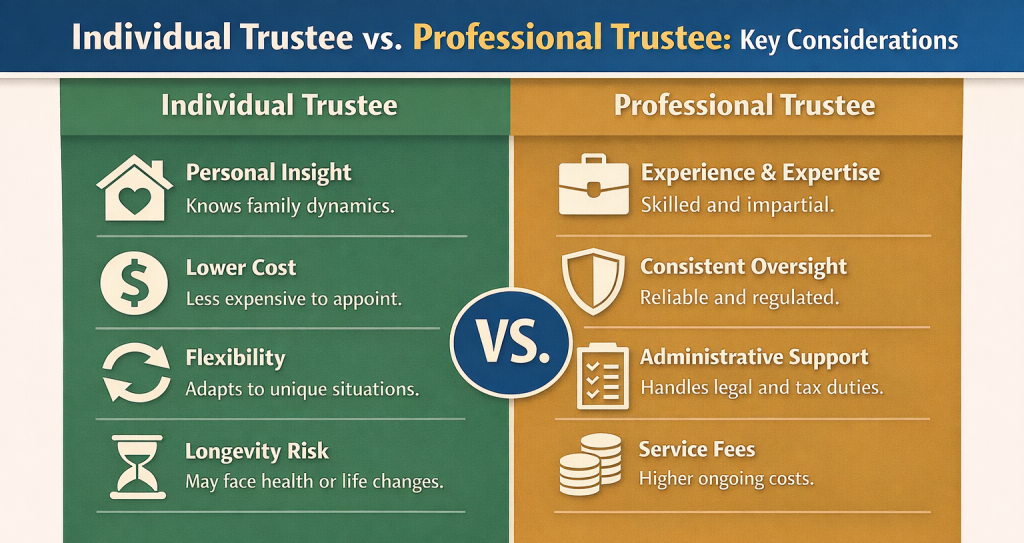
Individual Trustee vs. Professional Trustee
Some people choose a trusted individual as trustee. Others prefer a professional trustee, such as a corporate fiduciary.
Each option has tradeoffs. An individual trustee may offer personal insight and flexibility.
A professional trustee may provide consistency, experience, and continuity. In some cases, naming both, either as co-trustees or in succession, strikes the right balance.
The best choice depends on the size of the trust, the complexity of the assets, and family dynamics.
Age-Related Milestones
Discretionary trusts do not have to mean indefinite control or permanent limitation. You can build structure into the trust by tying larger distributions to age-related milestones or specific achievements.
For example, the trust might allow discretionary distributions during early adulthood, followed by larger lump sums at later ages. This approach recognizes that maturity often develops over time and that financial readiness is not automatic at a particular birthday.
You can also define milestones beyond age. Some trusts provide expanded distributions when a beneficiary reaches a certain level of financial stability, achieves a net worth threshold, or demonstrates consistent earning capacity.
These provisions allow the trust to reward responsibility without relying on rigid rules. By combining discretion with milestones, you create a plan that adapts to real life.
The trustee retains flexibility, but beneficiaries also gain clarity about what lies ahead.
Communication Can Prevent Hard Feelings
Even the most thoughtfully designed trust can cause confusion or resentment if beneficiaries do not understand its purpose. Clear communication can prevent many of those issues before they arise.
You do not need to share every technical detail, but explaining the reasoning behind the structure can make a difference. When beneficiaries know that the trust is meant to protect them and preserve opportunities, rather than restrict them, they are more likely to accept the arrangement.
Timing matters. Some conversations happen during life, while others may be addressed through letters or guidance included with the estate plan.
The goal is not to seek approval, but to provide context. Communication also sets expectations.
When beneficiaries understand that distributions depend on trustee judgment, they are less likely to view decisions as personal or arbitrary. That understanding can reduce conflict and support smoother administration over time.
Summing It Up
A discretionary trust offers a way to provide for beneficiaries without exposing them to unnecessary risk. By separating ownership from access, you create space for thoughtful decision-making and long-term planning.
The effectiveness of this strategy depends on careful drafting, realistic goals, and the right trustee. When those elements align, a discretionary trust can preserve assets, reduce conflict, and offer genuine peace of mind.
Working with an estate planning attorney allows you to tailor this tool to your specific concerns and family circumstances. With the right guidance, a discretionary trust can become a steady framework that supports your beneficiaries well beyond the initial transfer of assets.
We Are Here to Help!
As you can see, you have options when you plan your estate. When you work with us, we will learn about your situation and your objectives and make tailored recommendations. Ultimately, your plan will be custom crafted to bring your legacy goals to fruition when the time comes.
To get started, send us a message or call our Petaluma, CA estate planning office at 707-769-9975.

- Does a Revocable Living Trust Provide Asset Protection for the Beneficiaries? - October 9, 2026
- How To Handle Long-Distance Caregiving - October 5, 2026
- Your Estate Plan Should Be a Journey, Not an Odyssey - September 25, 2026
See Larger Map Get Directions